
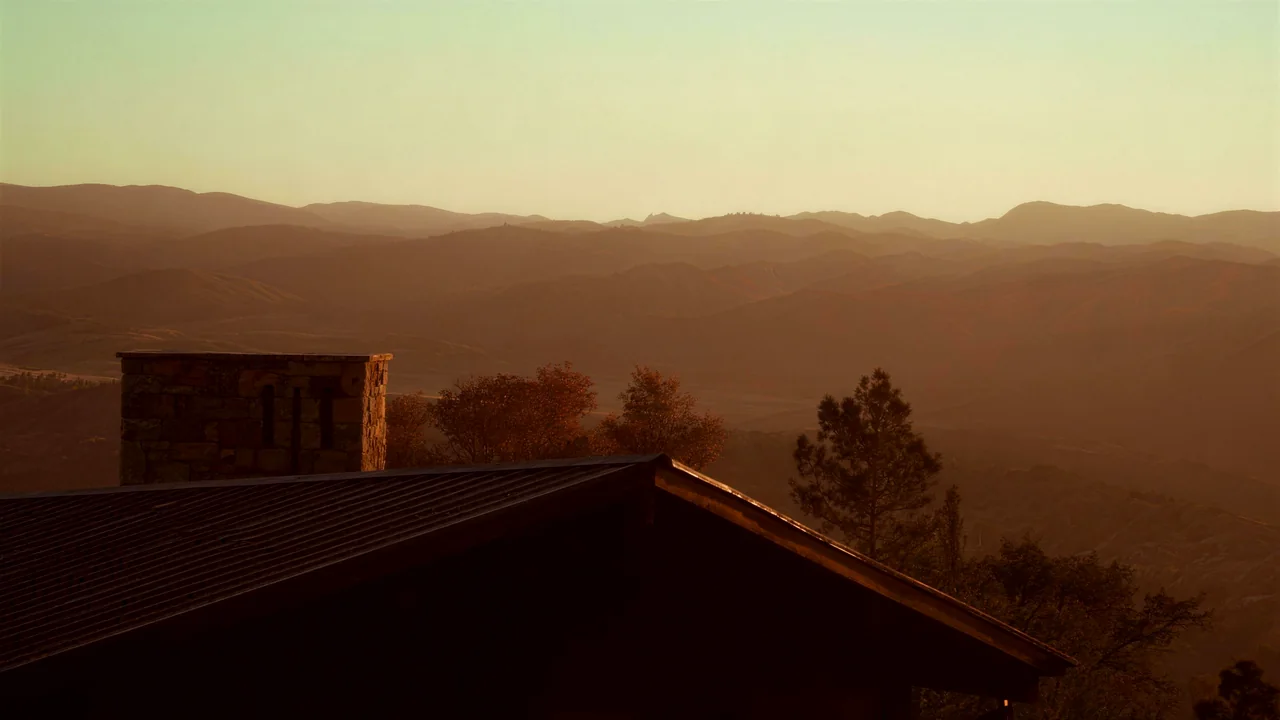
Nevada County · Ridge elevation
HVAC in Grass Valley, CA
Heating and cooling for Grass Valley homes, from Gold Rush era houses downtown to newer homes on the ridges. We test airflow before we recommend equipment.
Working in Grass Valley
A long, cold heating season
At 2,411 feet, Grass Valley has a longer and colder heating season than the towns below it, so equipment efficiency compounds into real money across the winter. Heat pumps here must be selected on their low-ambient capacity rather than their rated output at mild temperature, and dual-fuel changeover points need setting deliberately. Tree canopy at this elevation also means outdoor coils foul quickly with pine and oak litter — keeping the condenser clear is genuine maintenance, not an upsell.
What we see in Grass Valley
Our home base and the densest part of our service map. Grass Valley's housing stock runs from Gold-Rush-era homes and Victorians downtown to 1970s ranches and newer construction on the ridges — which means we see everything from knob-and-tube-era retrofits and undersized returns to modern zoned systems. Older homes here frequently have duct systems added long after the house was built, so we test airflow before recommending equipment.
Every recommendation we make here starts the same way it does everywhere: a load calculation using this elevation's design temperature, and a static-pressure reading to confirm the duct system can actually carry the airflow. Those two measurements are what separate a system that performs from one that merely runs.
Systems that suit Grass Valley
Heat Pumps
Cold-climate and dual-fuel systems for homes at elevation.
Learn moreHVAC Repair
No-heat and no-cool repair for furnaces, heat pumps and AC.
Learn moreRadiant & Hydronic Heating
Radiant floor heating, boiler service and snowmelt systems.
Learn moreIndoor Air Quality
Whole-home air filtration for wildfire smoke, dust and dry air.
Learn moreHVAC Replacement Mitsubishi Systems Day & Night Systems Commercial HVAC
In depth
HVAC service in Grass Valley, CA
What makes heating and cooling Grass Valley homes challenging?
Grass Valley homes range from historic timber-frame structures near downtown to hillside builds in dense pine forest, bringing uneven temperatures, costly aging heating, and foothill dust and wildfire smoke. Grass Valley-based Foothill Air Systems tailors solutions to each home.
Which HVAC services are offered in Grass Valley?
Grass Valley properties can get HVAC repair and replacement, heat pumps, Mitsubishi ductless systems, Day & Night central equipment, indoor air quality solutions, radiant and hydronic heating, and commercial HVAC services from Foothill Air Systems.
Comprehensive HVAC Solutions
Grass Valley HVAC solutions address sudden equipment breakdowns, aging air handlers, and overall climate control challenges across residential and workspace environments throughout the area.
- HVAC repair in Grass Valley
- HVAC replacement in Grass Valley
- All HVAC repair services
- All HVAC replacement services
Advanced Heat Pump Systems
Grass Valley heat pump equipment resolves high operational fuel expenses and provides year-round climate management without requiring conventional duct distribution networks.
- Heat pump installation in Grass Valley
- Heat pump repair in Grass Valley
- Heat pump maintenance
- All heat pump services
Mitsubishi Ductless & Multi-Zone Systems
Grass Valley Mitsubishi zoning setups eliminate persistent hot and cold spots in custom architecture, room additions, and historic properties where traditional ducting cannot fit.
Day & Night Central Heating & Cooling
Grass Valley Day & Night setups restore dependable whole-home comfort, resolve mechanical failures, and deliver steady thermal performance through extreme foothill weather shifts.
Indoor Air Quality Solutions
Grass Valley filtration and ventilation enhancements reduce trapped dust, fine forest debris, and smoke particles circulating through indoor living spaces.
- Indoor air quality installation in Grass Valley
- Indoor air quality testing
- All indoor air quality services
Radiant & Hydronic Heating
Grass Valley radiant and hydronic infrastructure resolves uneven floor temperatures, boiler pressure drops, and distribution failures in homes utilizing hot-water warmth.
- Radiant & hydronic heating repair in Grass Valley
- Radiant & hydronic heating installation
- Radiant & hydronic heating maintenance
- All radiant & hydronic heating services
Commercial HVAC Services
Grass Valley commercial HVAC capabilities resolve thermal imbalances, ventilation non-compliance, and sudden system failures in local retail, dining, and professional facilities.
- Commercial HVAC repair
- Commercial HVAC installation
- Commercial HVAC maintenance
- All commercial HVAC services
Why do historic Grass Valley homes have airflow problems?
Many Gold Rush-era and mid-century ranch homes in Grass Valley were built without chases, furred walls, or attic clearances for ductwork, so forcing in sheet metal causes constricted airflow and temperature stratification between floors.
Historic homes throughout downtown Grass Valley present structural hurdles that standard equipment configurations simply cannot handle.
When conditioned air cannot move freely, your equipment works much harder to satisfy the thermostat, leading to elevated utility bills and premature component breakdown. Homes built on granite outcroppings or steep hillside grades often have uninsulated crawlspaces that allow frigid ground moisture to seep into floor framing. Without targeted heating zones and properly sealed thermal boundaries, living areas directly above these crawlspaces remain stubbornly cold throughout the winter.
Forest Debris and Foothill Particulate Pressures
The natural landscape surrounding Grass Valley directly affects the longevity and efficiency of outdoor condensing units. Our neighborhoods sit under a dense canopy of Ponderosa pines, incense cedars, and black oaks that drop heavy debris throughout the year. Fine pine needles, sticky sap, and spring oak catkins work their way deep into the aluminum fins of exterior coils, forming a mat that severely chokes airflow.
When outdoor airflow becomes restricted, system head pressures climb dramatically, forcing compressors to run hotter and pull significantly more electrical current. This chronic heat stress breaks down internal compressor windings and causes capacitor failures during the hottest weeks of the summer. Regular coil cleaning and intentional unit placement away from prevailing roofline runoff are essential practices for protecting mechanical systems in our forested neighborhoods.
Fuel Sourcing Realities and Diurnal Temperature Extremes
Unlike valley communities down the hill, many properties in Grass Valley operate beyond municipal natural gas connections. Relying on delivered propane or supplemental wood heat makes winter warmth exceptionally costly and labor-intensive when legacy appliances fail to burn fuel efficiently. Switching from inefficient propane burners to modern electric platforms allows homeowners to maintain precise thermal control without being subjected to volatile fuel delivery pricing.
Our elevation creates wide diurnal temperature swings where afternoons can exceed ninety degrees, followed by evening drops into the fifties. In nearby Nevada City, homes experience similar structural challenges and microclimates, while properties down in Auburn experience less severe winter lows and face higher summer cooling demands. Navigating these steep daily temperature changes requires responsive controls and multi-stage equipment that ramps output up or down rather than blasting on and off at full capacity.
Particulate Infiltration and Air Quality Challenges
Foothill living brings serious air filtration challenges that go far beyond standard household dust. Grass Valley regularly contends with heavy spring pollen loads, fine wood smoke from neighborhood stoves, and regional wildfire smoke that settles into our mountain canyons. Older historic homes often lack airtight envelopes, allowing fine particulate matter to enter living spaces through unsealed windows, floorboards, and ceiling penetrations.
Standard one-inch fiberglass filters do little to catch microscopic smoke particles, which can leave lingering odors inside your home. Upgrading to whole-house media filtration, dynamic air scrubbers, and balance-controlled ventilation helps keep indoor air cleaner when outdoor conditions deteriorate. Proper filtration also protects internal blower assemblies and evaporator coils from accumulating sticky films that diminish heat transfer efficiency.
Hydronic Loop Complexities in Rural Properties
Many custom properties and rural residences across Nevada County rely on closed-loop hot water systems for baseboard or in-floor heat. While hydronic heat provides comfortable, quiet warmth without blowing air, these systems require careful fluid management and hydraulic balancing. If your home uses well water, water chemistry is worth checking, since internal scaling within boiler heat exchangers reduces heat transfer and can cause localized overheating.
Air pockets trapped inside radiant manifolds or baseboard circuits frequently cause cold zones in distant rooms, leaving homeowners to wonder why the system runs without heating the house. Circulator pump failure, expansion tank waterlogging, and pressure relief valve leaks are common issues that arise when these systems go years without professional inspection. Maintaining proper system pressure, water chemistry, and pump sequencing ensures your hydronic loops deliver consistent floor warmth through the coldest winter stretches.
How does Foothill Air Systems work on Grass Valley projects?
Foothill Air Systems approaches each Grass Valley project with local architecture, microclimates, and Nevada County conditions in mind, delivering heating, cooling, and indoor comfort across Nevada County and Truckee/Tahoe with craftsmanship and integrity.
Whether you need a custom Mitsubishi multi-zone application, a rugged Day & Night split system, advanced indoor air filtration, or precision hydronic boiler calibration, our team brings the proper tools and a careful approach to get the job done right. We never push generic, one-size-fits-all installations that fail to match your home's structural realities or electrical service capacities. Instead, we take the time to evaluate your building envelope, duct pathways, and fuel availability to configure reliable, energy-efficient comfort systems that stand up to foothill weather.
How can Grass Valley residents schedule an HVAC consultation?
Grass Valley residents can resolve uneven temperatures, high energy bills, or filtration concerns by scheduling a comprehensive system consultation or calling Foothill Air Systems at (530) 212-0057.
Foothill Air Systems remains dedicated to keeping your home or business comfortable, healthy, and energy-efficient through every season.
Request service
HVAC service in Grass Valley
Tell us what your system is doing and we will confirm scheduling for Grass Valley and the surrounding area.
- Grass Valley, CA & Truckee/Tahoe
- Mon–Fri: 8AM–5PM
Sat: By Appointment
Send us the details
A technician reviews every request. No call centre.