

Placer County · Lower foothills
HVAC in Auburn, CA
Cooling and duct work for Auburn's hot summers, where sealing attic ducts often helps more than a bigger system.
Working in Auburn
A genuine two-season load
At 1,227 feet, Auburn carries a real heating season and a real cooling season, which makes a single system that does both efficiently the obvious answer. Many properties at this elevation are on propane rather than natural gas, and that materially changes the economics: displacing propane heating hours with a heat pump has a direct, calculable effect on operating cost. This is prime territory for heat pump and dual-fuel conversions.
What we see in Auburn
Down the hill in Placer County, Auburn's summers run hot enough that cooling capacity and duct performance in unconditioned attics drive most of our work — the opposite emphasis from the ridge towns. Attic duct sealing and insulation frequently deliver more comfort per dollar here than larger equipment.
Every recommendation we make here starts the same way it does everywhere: a load calculation using this elevation's design temperature, and a static-pressure reading to confirm the duct system can actually carry the airflow. Those two measurements are what separate a system that performs from one that merely runs.
Systems that suit Auburn
Heat Pumps
Cold-climate and dual-fuel systems for homes at elevation.
Learn moreHVAC Replacement
Furnace, AC and heat pump replacement sized by a load calculation.
Learn moreHVAC Repair
No-heat and no-cool repair for furnaces, heat pumps and AC.
Learn moreIndoor Air Quality
Whole-home air filtration for wildfire smoke, dust and dry air.
Learn moreMitsubishi Systems Day & Night Systems Radiant & Hydronic Heating Commercial HVAC
In depth
HVAC service in Auburn, CA
What heating and cooling failures are common in Auburn?
Common Auburn failures include cooling setups overwhelmed by foothill heat, aging heat pumps blowing cool air on freezing canyon nights, and lingering indoor dust. Foothill Air Systems provides diagnostics, installations, and repairs for Auburn properties.
Auburn’s elevation transition zone makes heating and cooling problems compound quickly, leaving multi-story layouts uneven, radiant loops sluggish, and commercial spaces uncomfortable for patrons.
What HVAC services does Foothill Air Systems offer in Auburn?
In Auburn, Foothill Air Systems offers heating and air conditioning repair and replacement, heat pumps, Mitsubishi ductless systems, Day & Night equipment, indoor air quality, radiant and hydronic heating, and commercial HVAC engineering and upkeep.
Comprehensive Heating & Air Conditioning
Auburn heating and air conditioning services restore balanced airflow and dependable temperature control to properties suffering from chronic mechanical breakdowns or obsolete equipment.
- HVAC repair in Auburn
- HVAC replacement in Auburn
- All HVAC repair services
- All HVAC replacement services
Advanced Heat Pump Solutions
Auburn heat pump work eliminates heating capacity loss during freezing snaps and lowers excessive monthly utility spikes by optimizing high-efficiency reverse-cycle hardware.
Mitsubishi Ductless & Multi-Zone Systems
Our variable-speed solutions overcome difficult structural layouts, lack of usable attic duct pathways, and stubborn hot or cold zones across individual rooms.
Day & Night Central Equipment Services
We resolve electrical faults, mechanical friction, and refrigerant pressure imbalances across durable split systems designed for continuous whole-structure comfort.
Whole-Structure Indoor Air Quality
Auburn indoor air quality strategies reduce airborne dust, regional brush smoke residue, and stale humidity from tightly sealed living environments.
Radiant & Hydronic Heating Systems
We resolve burner malfunctions, manifold pressure drops, and uneven heat transfer throughout embedded underfloor tubing networks.
- Radiant & hydronic heating repair
- Radiant & hydronic heating installation
- Radiant & hydronic heating maintenance
- All radiant & hydronic heating services
Commercial HVAC Engineering & Upkeep
Auburn commercial HVAC coverage prevents workplace disruptions, regulates heavy occupant ventilation loads, and stabilizes retail temperatures to keep your operations running smoothly.
- Commercial HVAC repair
- Commercial HVAC installation
- Commercial HVAC maintenance
- All commercial HVAC services
Why do Auburn's temperature swings wear out HVAC systems?
Auburn sits at roughly 1,200 to 1,500 feet, where triple-digit afternoons give way to cool, damp canyon breezes from the American River basin at nightfall, forcing HVAC systems through harsh daily reversals.
Auburn sits right in a demanding transition zone where the Sacramento Valley floor climbs into the Sierra Nevada foothills.
Auburn’s extreme diurnal swing forces mechanical systems through harsh, rapid operational reversals within single twelve-hour spans. Compressor run-capacitors weaken under high thermal head pressures during the afternoon, only for system reversing valves to face freezing canyon air hours later. In unconditioned attics and crawlspaces, these temperature shifts cause rapid expansion and contraction across ductwork, pulling connections loose and creating hidden air leaks.
Structural Diversity and Architectural Demands
Neighborhood architecture throughout Auburn varies wildly, creating distinct airflow and distribution obstacles. In historic districts near Old Town and Downtown, beautiful Victorian and craftsman structures often feature zero attic clearance, minimal wall insulation, and complete absence of supply chases. Standard forced-air retrofits in these older spaces often cause severe wall damage or fail to move conditioned air through high-ceilinged rooms.
Further out toward Bowman and Christian Valley, sprawling ranch-style homes and custom multi-level builds introduce an entirely different challenge. Vaulted timber ceilings, expansive south-facing glass, and open floor plans allow thermal energy to stratify aggressively between floors. Upper bedrooms become noticeably warm during late afternoons while main living areas remain chilly, forcing blowers to run constantly without achieving real balance.
Rural properties along the canyon ridges sometimes rely on custom hydronic loops embedded in thick concrete slabs. When water chemistry deteriorates or air binds inside these unconditioned floor loops, heating transfers fail, leaving cold spots across stone and tile surfaces. Maintaining these closed hydronic loops requires precise fluid testing and pressure management that standard flatland technicians simply overlook.
Sierra Foothill Environmental Challenges
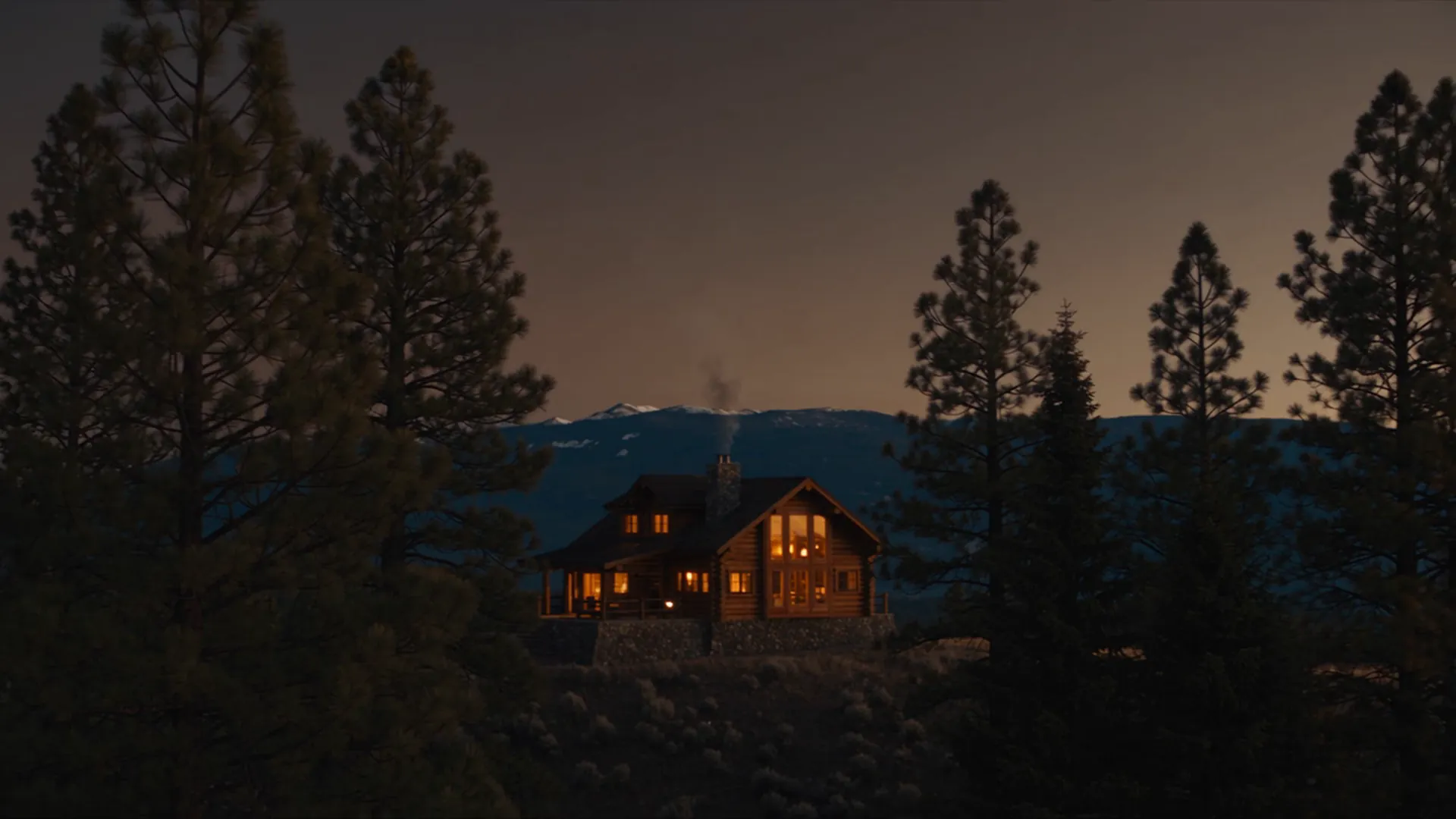
The natural vegetation that gives Auburn its scenic character places an immense physical load on heating and cooling machinery. Dense stands of ponderosa pine, black oak, and foothill chaparral release heavy dust, seed pods, and yellow pollen that cake against outdoor condenser fins. This buildup blankets the heat-exchange surfaces, choking necessary airflow and forcing compressors to operate at dangerously elevated internal temperatures.
During fire season and controlled agricultural burns across Placer and Nevada counties, fine smoke particulate infiltrates living envelopes through exterior fresh-air intakes and unsealed building cracks. Standard single-stage return air filters clog quickly, choking air handlers and allowing fine soot to circulate through indoor spaces. Without specialized dynamic media filtration and active purification modules, indoor breathing environments quickly deteriorate under foothill smoke events.
Equipment in Auburn, where Highway 49 climbs north toward Grass Valley and I-80 runs down toward Rocklin, must withstand these demanding mountain-edge conditions. Systems calibrated purely for predictable valley weather fail prematurely when confronted with foothill topography, damp winter air inversions, and continuous forest detritus. Dependable comfort in this environment requires hardware, sizing, and duct designs specifically tailored to Auburn terrain.
Does Foothill Air Systems serve Auburn and Placer County?
Yes. Foothill Air Systems serves Auburn and Placer County, as well as Nevada County and the Truckee and Tahoe regions, accounting for local building configurations, crawlspace humidity, and Placer County permitting requirements.
Our technical foundation rests on careful craftsmanship, integrity, and mechanical excellence across complex platforms. We specialize in variable-capacity inverter technologies, multi-zone ductless arrangements, precision hydronic boilers, and complex commercial rooftop mechanicals. By evaluating static duct pressure, heat gain through foothill timber framing, and localized thermal loads, we engineer long-term systems that run quietly and consume minimal electricity.
We never rely on temporary patches or generic equipment swaps that leave underlying airflow defects unaddressed. Instead, our team pinpoints the exact mechanical root causes behind poor temperature control, high utility bills, and indoor air contamination. Every installation, tune-up, and mechanical overhaul is completed to exacting standards, ensuring your home or business maintains balanced comfort through blistering heat and freezing winter canyon drafts.
How do you get an on-site HVAC evaluation in Auburn?
Auburn property owners can schedule an on-site mechanical evaluation with Foothill Air Systems or call (530) 212-0057 to resolve hot and cold spots, reduce brush smoke indoors, or upgrade to high-efficiency inverter technology.
We bring transparent communication and meticulous craftsmanship to every residential and commercial project we manage.
Request service
HVAC service in Auburn
Tell us what your system is doing and we will confirm scheduling for Auburn and the surrounding area.
- Grass Valley, CA & Truckee/Tahoe
- Mon–Fri: 8AM–5PM
Sat: By Appointment
Send us the details
A technician reviews every request. No call centre.