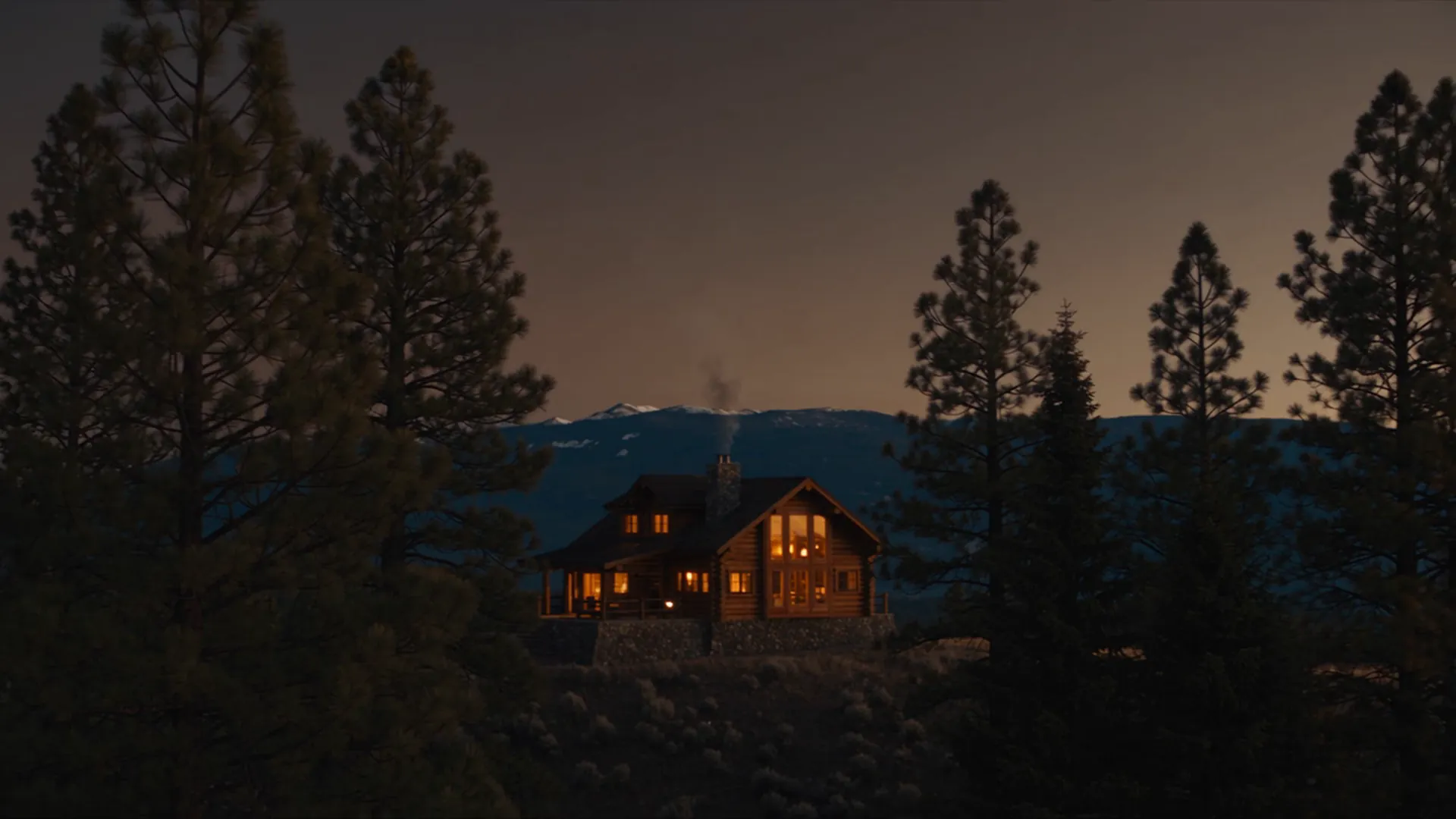

A cold-climate heat pump can heat a home at 6,000 feet, including through much of a Truckee or Tahoe winter, but it cannot defy physics. Its capacity still drops as outdoor temperatures fall, so it has to be sized for your design temperature, placed above the snow, and paired with a planned backup heat source for the coldest nights.
Heat pumps have improved a great deal, and cold-climate models are a genuine option in the mountains. They are also easy to oversell. This guide covers what these systems are designed to do, where their limits are, and what has to be right for one to work in Truckee, Tahoe City or Kings Beach.
What makes a heat pump "cold-climate"?
Every air-source heat pump pulls heat from outdoor air. Even very cold air holds usable heat, but the colder it gets, the harder the compressor has to work to collect it. A standard heat pump loses capacity quickly as temperatures drop and hands more of the job to electric resistance backup.
A cold-climate heat pump is engineered to keep producing useful heat at much lower outdoor temperatures. Most use a variable-speed, inverter-driven compressor that can ramp up when it is cold, along with refrigerant circuits and controls tuned for low-temperature operation. Mitsubishi's Hyper-Heat line, for example, is designed to deliver heating at low outdoor temperatures. Manufacturers publish performance data for these models at specific outdoor conditions, and that data, not the headline efficiency rating, is what a mountain design should be based on.
Our HVAC glossary explains inverter compressors, design temperature, defrost cycles and auxiliary heat in more detail.
What can a cold-climate heat pump do at 6,000 feet?
When it is selected and installed correctly, a cold-climate heat pump can:
- Carry the heating load for most hours of a mountain winter, since most hours are not the coldest hour of the year.
- Provide cooling in summer from the same equipment, which matters more in Tahoe than it used to.
- Modulate output smoothly, holding steady temperatures instead of cycling hard on and off.
- Reduce reliance on propane or heating oil in homes that have no natural gas.
- Heat specific zones independently, which suits part-time cabins and homes with additions.
What can't it do?
Being honest about limits is what keeps a mountain heat pump project from disappointing the owner:
- It cannot hold full capacity at every temperature. Output declines as it gets colder. On the coldest nights of the year, it may not cover the full load alone.
- It cannot overcome a very leaky building. An older cabin with little insulation and single-pane glass may have a heating load that no reasonably sized heat pump can meet at design temperature.
- It cannot run buried in snow. An outdoor unit that sits in a drift, or under a roof that sheds snow and ice onto it, will not move air across its coil.
- It cannot heat without electricity. During a power outage, a heat pump is off unless backup power is in place, which is true of any forced-air system.
- It cannot skip defrost. In cold, humid conditions frost builds on the outdoor coil, and the unit periodically reverses to melt it. That is normal, but it has to be planned for.
For a side-by-side of a heat pump against a furnace or dual-fuel system, see heat pump vs. furnace in the Sierra foothills.
When is a cold-climate heat pump the right fit in Truckee and Tahoe?
It tends to be a strong fit when:
- The home is reasonably well insulated and air-sealed, such as newer construction or a remodeled cabin.
- A backup heat source is available and planned for, whether electric resistance, a furnace in a dual-fuel setup, or an existing boiler or stove.
- There is space to mount the outdoor unit well above expected snow depth and away from roof drip lines.
- The electrical service can support the equipment and any backup heat.
- The owner wants cooling as well as heating, or wants zoned control in a part-time home.
It is a weaker fit where the building envelope is poor, where there is no practical spot for the outdoor unit, or where the owner expects it to replace every other heat source with no backup at all.
What goes wrong with heat pumps at elevation?
Heat pump problems in the mountains tend to follow a pattern:
- Sized for mild conditions. The unit handles autumn well, then runs on expensive auxiliary heat through January.
- No real backup strategy. Backup heat is an afterthought, undersized or wired so it runs far more than it should.
- Snow and ice at the outdoor unit. Units placed on grade, under eaves or where plowed snow is piled ice up and struggle through defrost.
- Poor condensate and defrost drainage. Meltwater from defrost refreezes under the unit and builds up into the coil.
- Line sets and wall penetrations not protected from the weather, leading to damaged insulation and lost efficiency.
- Non-cold-climate models installed in a cold climate, often because the equipment was chosen by price or availability.
Many of these are maintenance issues too. Keeping the coil clean and the defrost system working is part of what a Comfort Club tune-up covers.
What do we look for before recommending one?
A mountain heat pump assessment usually includes:
- A Manual J load calculation using the design temperature for your specific location, not a valley figure.
- A check of the manufacturer's low-temperature performance data against that load, to see how much of the coldest hours the heat pump can carry.
- A backup heat plan, whether that is electric strips, an existing furnace or boiler, or a dual-fuel configuration.
- A duct inspection and static pressure test for ducted systems, or a room-by-room layout for ductless heads. Our guide to ducted vs. ductless systems covers the tradeoffs.
- Electrical checks for panel capacity and circuit routes.
- An outdoor placement plan covering stand or bracket height, snow shedding from the roof, and drainage for defrost meltwater.
How should backup heat be set up?
Every mountain heat pump needs a plan for the hours it cannot cover on its own. The three common approaches are:
- Electric resistance strips in the air handler, which are simple and reliable but expensive to run for long periods. They should be sized and controlled so they only help on the coldest hours and during defrost, not run all winter.
- A dual-fuel furnace, where a gas or propane furnace takes over below a set outdoor temperature. This is often the most economical approach where fuel is available.
- An existing heat source, such as a boiler, a radiant floor or a wood or pellet stove, used deliberately as the second stage.
The thermostat and control settings matter as much as the hardware. A changeover point or backup lockout set by guesswork can leave the backup running when the heat pump could have carried the load, or leave the house short on a cold morning.
What is the next step?
If you are considering a heat pump in Truckee, Tahoe City or elsewhere in the high country, start with a load calculation and an honest look at backup heat. Read more about our heat pump services and Mitsubishi systems, browse the heating at elevation guides, or contact us to schedule an assessment.